
EM Fields & Exposure
- Magnetic/ electric field assessment above/below ground
- Profiles and maps for substations, plants & rail corridors
- Comparison with ICNIRP / EN exposure limits
XGSA FD models electromagnetic fields and coupling between overhead and buried conductors, rails, pipelines and cables across frequency. Evaluate induced voltages/currents, magnetic field compliance, and mitigation effectiveness with realistic soil and return paths.
Quantify interference, induced effects and EM exposure to inform safe routing and bonding.
| Area | Details |
|---|---|
| Modelling | Frequency-domain solution with ground-return; mutual coupling among overhead lines, underground cables, rails, pipelines; realistic bonds, screens and terminations. |
| Use Cases | Rail electrification & stray currents, pipeline interference, corridor co-location, plant EM exposure, HV/OHL–cable interactions, telecom co-routing. |
| Inputs | Conductor geometry & routing, multilayer soil, load spectra or operating cases, bonding schemes, separation/clearances, shielding strategies. |
| Outputs | EM field maps/profiles, induced V/I, transfer potentials, screening effectiveness, and compliance indicators versus ICNIRP/EN limits. |
| Integration | Complements GSA/GSA FD for earthing, XGSA TD for time-domain studies, and NETS for multi-conductor networks to deliver end-to-end assessments. |
Need time-domain transients? See XGSA TD. For grounding safety focus, see GSA / GSA FD.
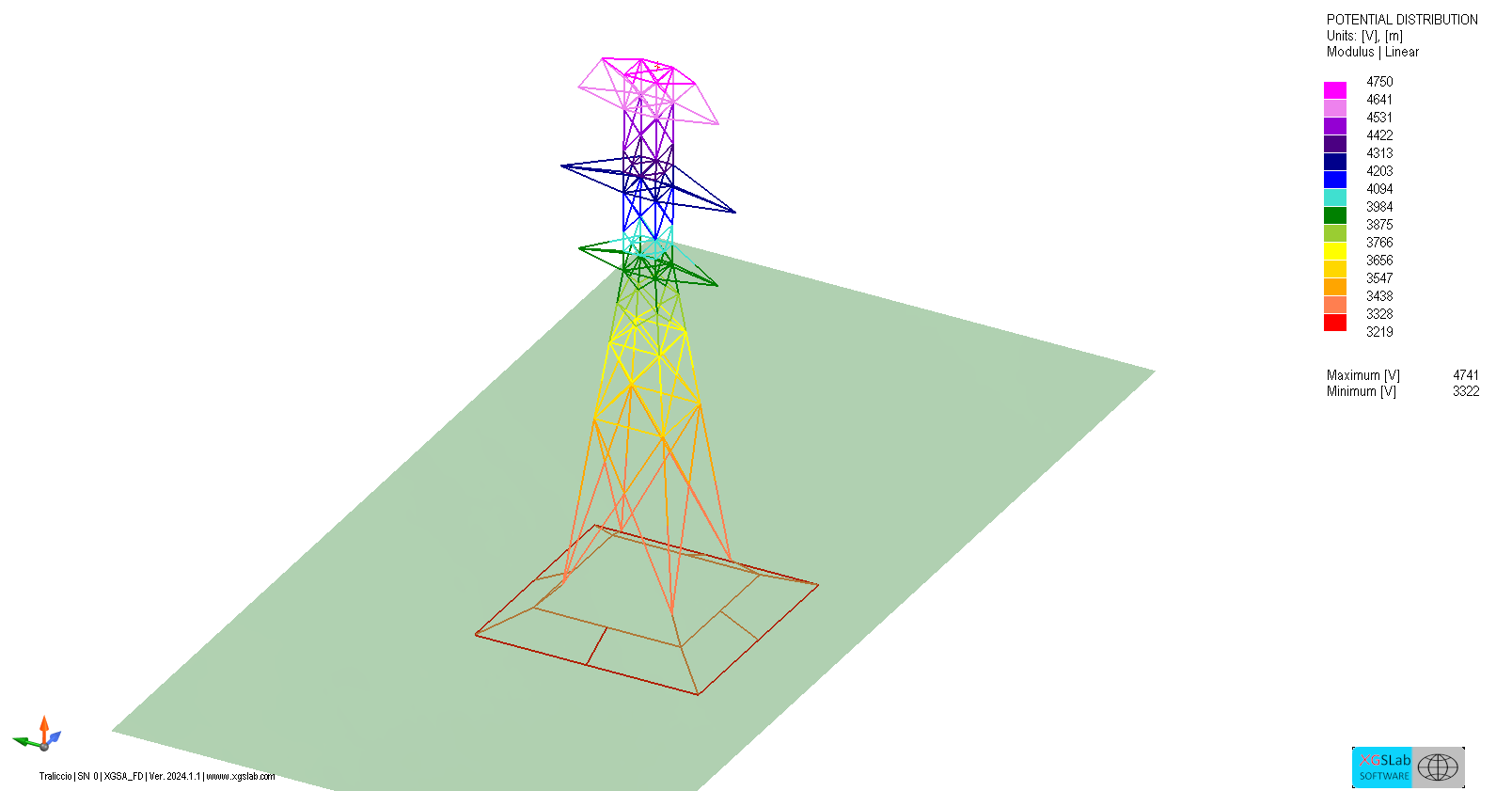
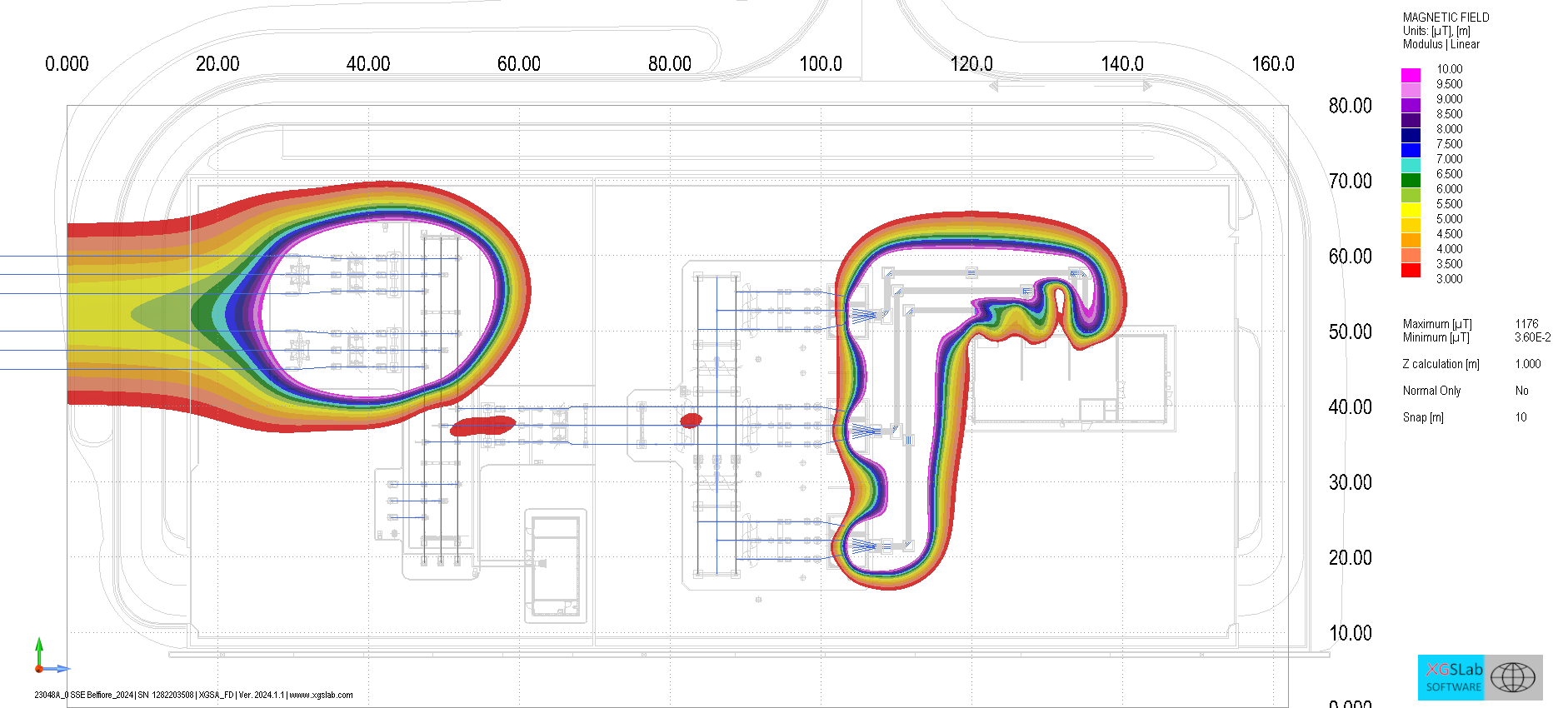
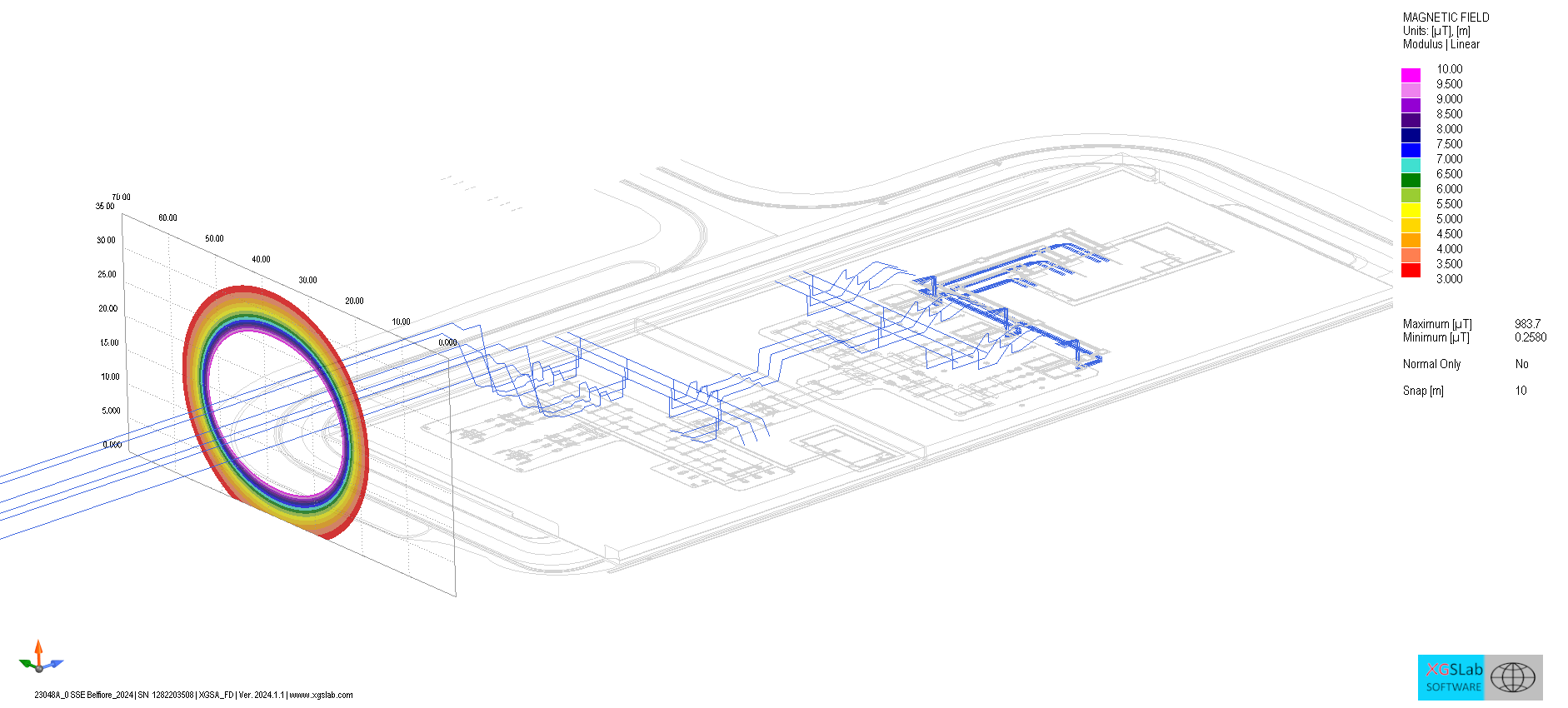
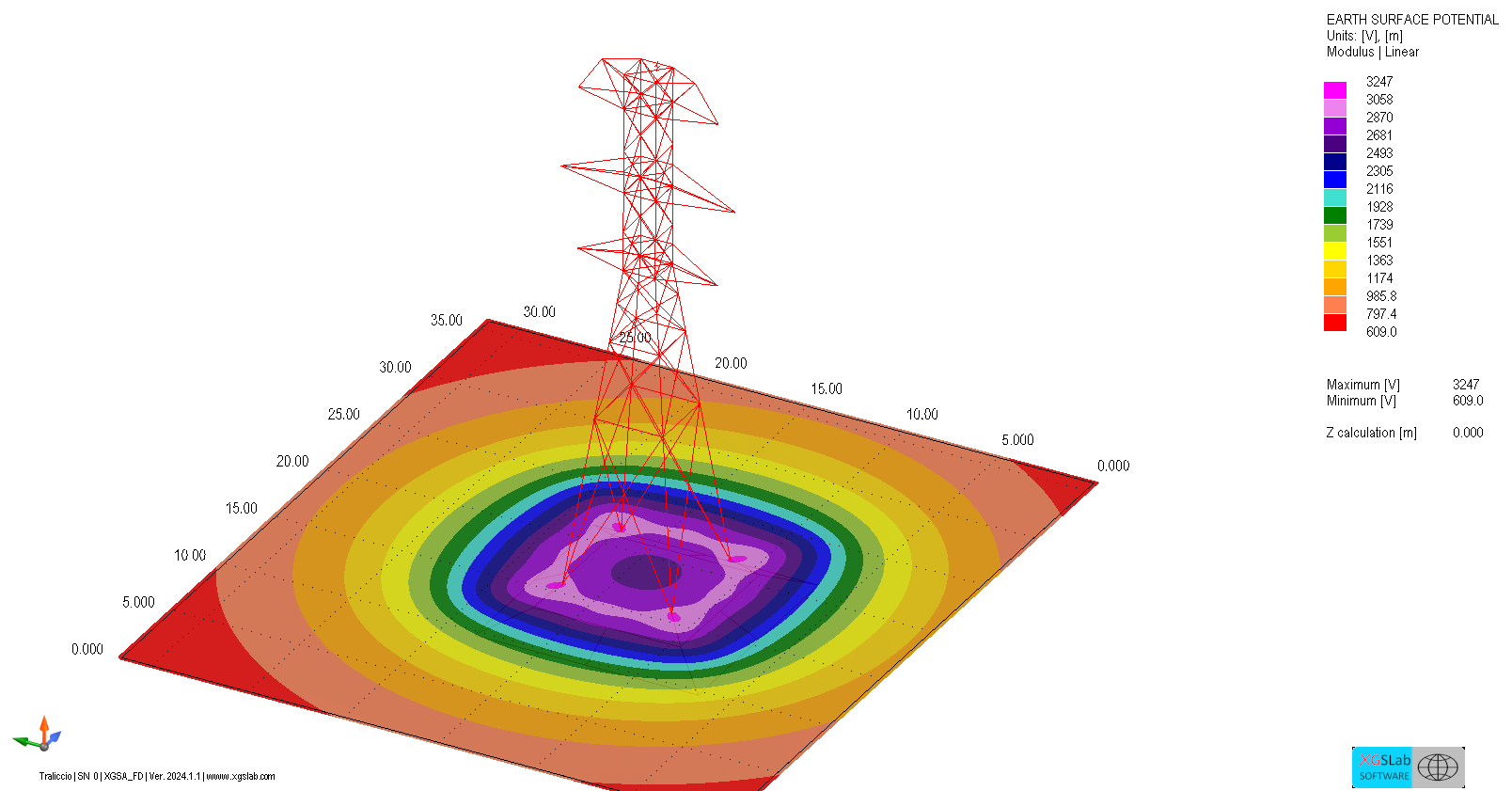
Define routes and bonds, evaluate exposure/induced effects, optimize mitigation.
Geometry, soil, bonds, load cases/spectra, separation and corridor data.
Coupling paths, return currents, shields/screens and termination schemes.
Field profiles/maps, induced V/I, transfer potentials, compliance margins.
Rerouting, extra bonds/returns, shielding and separation optimization.
Share your route geometry and operating scenarios—get a defendable XGSA FD assessment and mitigation options.